‘Overture’ from The Pirates of Penzance (1879)
By Arthur Sullivan, libretto by William S. Gilbert.
HSC Topic: Music in the Nineteenth Century
Length: 7-8 minutes
Savoy Opera Overture structure – 3 sections: Lively Opening, Slow Middle, Fast Ending (compressed sonata form)
Instrumentation: Flute (1&2), Oboe, Clarinet in A (1&2), Bassoon, Horn in F (1&2), Trumpet in A [alternate in Bb] (1&2), Trombone (1&2), Timpani, Percussion (1&2), Violin (1&2), Viola, Cello, Double Bass.
A biographic sketch of the composers
Arthur Sullivan (1842-1900) was an English composer, known best for his partnership with librettist W.S Gilbert. Their work together became known as the “Savoy Operas” and they pioneered the English style of the “operetta”.
The collaborations of Gilbert and Sullivan continue to receive critical acclaim for their witty lyrics, memorable musical ideas and satirical yet whimsical depictions of English society. Notable examples include H.M.S Pinafore (1878), The Pirates of Penzance (1879) and The Mikado (1885).
Sullivan also composed more classical works outside of the famous partnership. These included The Prodigal Son (1869), The Light of the World (1873) and the “romantic opera” Ivanhoe, written for the opening of the Royal English Opera House in 1891.
Sullivan was born in London and studied at the Royal Academy of Music and Leipzig Conservatory in Germany. In 1876 he took the role of Principal at the National Training School for Music (later the Royal College of Music). He was an active conductor for the 5 years he held the position, and was knighted in 1883.
Sullivan died from heart-failure in 1900, and his passing was mourned as an event that “not only deprives England of the man who for many years has been her most conspicuous composer, but will afflict all who care for music with a keen sense of personal loss…” (The Times, 1900)
The place of this work in the composer’s output
The Pirates of Penzance continues to be one of the most well known of the Savoy Operas, second only perhaps to H.M.S Pinafore. Premiering in 1879 in New York and 1880 in London, it was the fifth collaboration of Gilbert and Sullivan. It was only their third full length operetta however, placing it relatively early in the chronology of their partnership.
Pirates was the final full work that Gilbert and Sullivan released under the Comedy Opera Company, which was to become the Savoy Theatre during the run of their next production Patience (1881). The Savoy Theatre would release the remainder of the duo’s work, concluding with The Grand Duke in 1896.
Performance
Class arrangement scored for upper brass/woodwind in Bb, lower brass/woodwind in C, piano, guitar, violin, viola, lower strings, vocals (soprano and tenor).
Please note that a score for an actual overture (not a class arrangement) would not include vocals.
Potential HSC pieces:
| Title & Link | Overview | Pros & Cons |
| ‘Poor wand’ring one!’ https://www.youtube.com/watch?v=SEXcnTdwUII&ab_channel=MathildeLEMAIRE | Coloratura aria For Soprano with accompaniment Range (generally) C4 – C6 3 minutes Sung in Act I by Mabel First characterisation of her as romantic and naive, but also bold and assertive. | Pros: Coloratura arias are designed to show off vocal virtuosity Good range for young women Chance to demonstrate comedic or romantic interpretation skills Cons: Most likely familiar to examiners Challenging pitch and vocal techniques Easy to over-act |
| ‘I am the very model of a modern Major-General’ https://www.youtube.com/watch?v=Rs3dPaz9nAo&ab_channel=EnglishNationalOpera | “Patter song” – rapid-fire polysyllabic lyrics For Tenor with acc. Range (generally) Bb3 – Eb5 5 minutes Sung in Act I by Major-General Stanley Satirising high ranking military men as being educated on all matters but the relevant military tactics. | Pros: Patter songs can demonstrate great technical skill Comedic interpretation opportunity Cons: Familiar to examiners Difficult range for young men (mature voice) Errors can be disastrous at high tempo Easy to rush under exam conditions Length – may need to perform sections |
| ‘Grand Selection Pirates of Penzance’ From J.W Pepper’s Classic Cornet Solos (1881) Arr. by William R. Stobe https://drive.google.com/file/d/11491POmlpztVlXx9K9BCLPwLhz9N0LdM/view?usp=sharing | Medley of themes of Pirates For Bb cornet with piano acc. Range G3 – G4 3-5 minutes Themes include: With cat-like tread Poor wand’ring one Modern Major-General When Fredrick was a little lad | Pros: Original and arrangement before 1900 Contrasting melodies to interpret Avoids extensive upper register- good for extended performances Opportunity to “mimic” vocals Cons: Relatively easy piece Could reflect range of instrument more effectively Examiner familiarity? Could also be a pro for cornet. |
Composition
Choose one of the listed musical ideas to be the basis of a composition:
“Come friends, who plough the sea” motif

“Oh leave me not to pine” melody

Compositions MUST:
- Be 30 seconds – 1 minute long
- Be scored for a minimum of 3 performers
- Reflect a musical style from 1600-1900 that is NOT Savoy Opera
- Include an written introduction (max 250 words) explaining the links between your work and the chosen stimulus, with reference to the concepts of music
- Can quote the musical idea directly, but it is more important to employ comparable concepts of music
Listening
Score Reading
Fast Ending (F onwards):
- Pray observe the magnanimity (Act I)
- Climbing over rocky mountain (Act I)
- When you left our pirate fold (Act II)
- How beautifully blue the sky (Act I)
Listen to the songs referenced in the final section of ‘Overture’. Annotate on the score where the musical ideas from these songs appear including the lyrics that are sung in the original songs where relevant.
HINT: some of these will be direct musical quotes, while others are more subtle references. Consider the concepts of music when looking for references.
Reflection: how does Sullivan utilise texture and tone colour in ‘Overture’?
Extension – Consider the plot of Pirates and where these musical ideas appear in the story.
Explain why Sullivan chose these musical ideas to communicate a summary of the plot. Refer to at least two concepts of music in your response.
Musicology
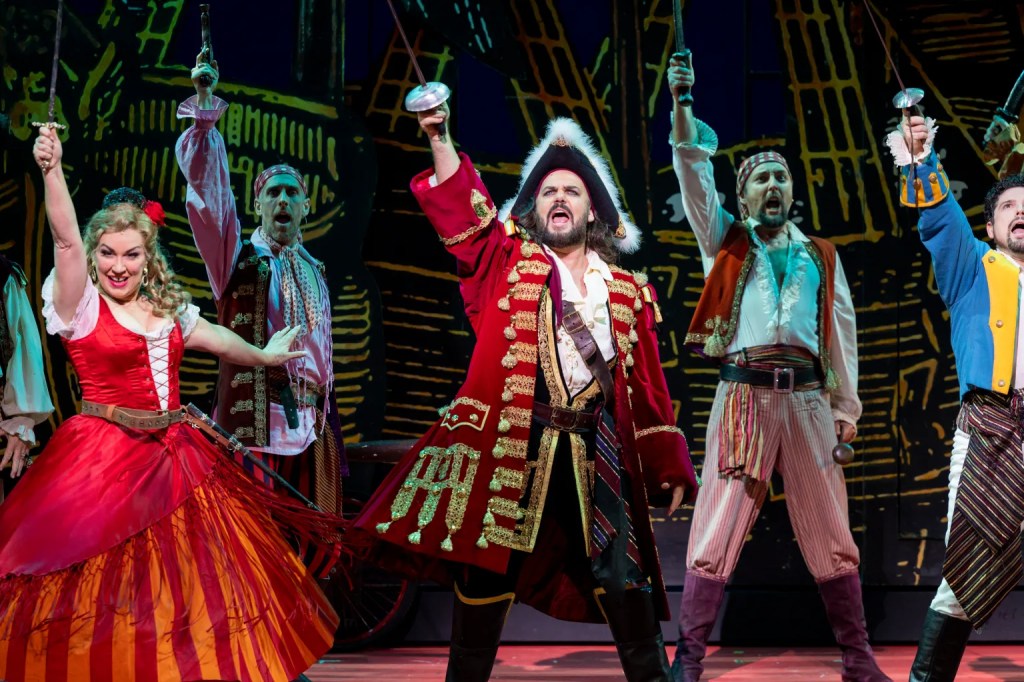
Read the Opera vs Operetta vs Musical and answer the following questions:
- What is the difference between an opera and a musical?
- How would you technically distinguish an opera from an operetta?
- How would you technically distinguish an operetta from a musical?
- According to Stephen Sondhiem, what is the fundamental difference between operatic and theatre music? Explain in your own words.
Independent Research
Write 200 – 500 words explaining the historical development of ONE of the following productions:
- Opera
- Operetta
- Musical Theatre
REMEMBER: consider your choice in the context of your potential core or additional topic for the HSC (e.g. musical theatre for Music of the last 25 years (Australian focus), or opera for Classical music).
Extension – write a review arguing for or against the following statement:
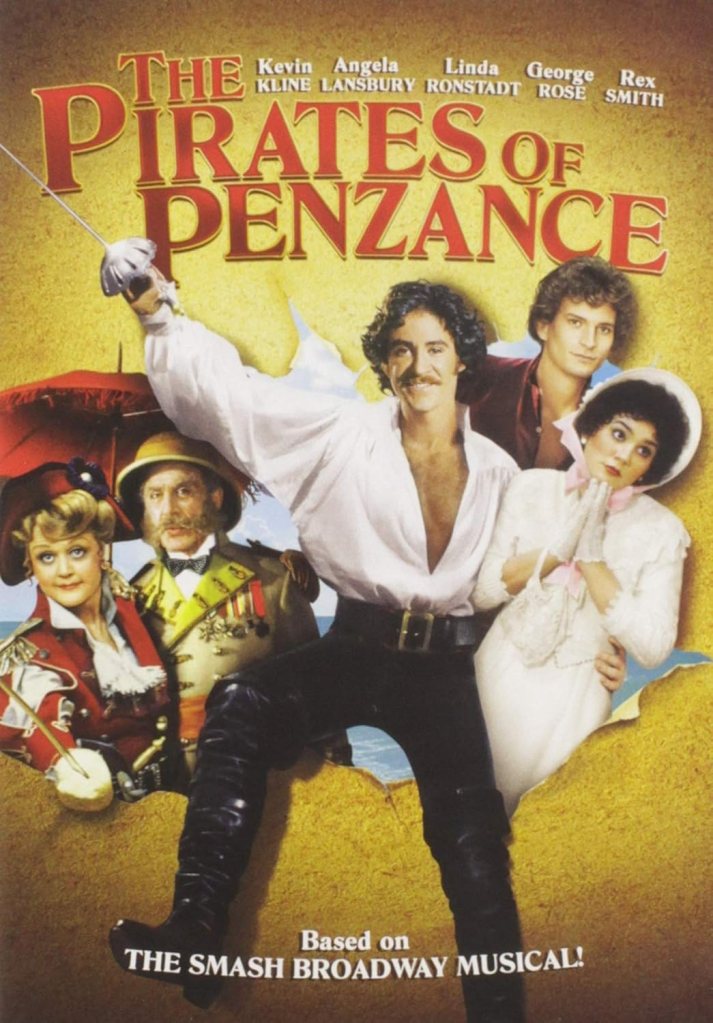
The Pirates of Penzance is actually a musical.
Reference List
Brown, H. (2021, October 25). The Major-General’s Song — Gilbert and Sullivan’s “patter” is still twisting tongues. Financial Times. https://ig.ft.com/life-of-a-song/modern-major-general.html
Predota, G. (2021, November 21). On this day: Arthur Sullivan died. Interlude. https://interlude.hk/on-this-day-22-november-arthur-sullivan-died/
The Editors of Encyclopedia Britannica . (2020). Arthur Sullivan | Biography, Operas, Significance, & Facts | Britannica. In Encyclopædia Britannica. https://www.britannica.com/biography/Arthur-Sullivan
The Pirates of Penzance (Sullivan, Arthur) – IMSLP. (2022). Imslp.org. https://imslp.org/wiki/The_Pirates_of_Penzance_(Sullivan%2C_Arthur)
 Lolagogy